B2 First Speaking Part 3 – TIPS

Here are some important aspects that can help you succeed in B2 First Speaking Part 3. As you know, this part tests your interaction skills, so you need to make sure you follow certain strategies to achieve a high score. Here is a conversation which showcases how the candidates follow these tips. Read the conversation and identify these features. Continue reading “B2 First Speaking Part 3 – TIPS”
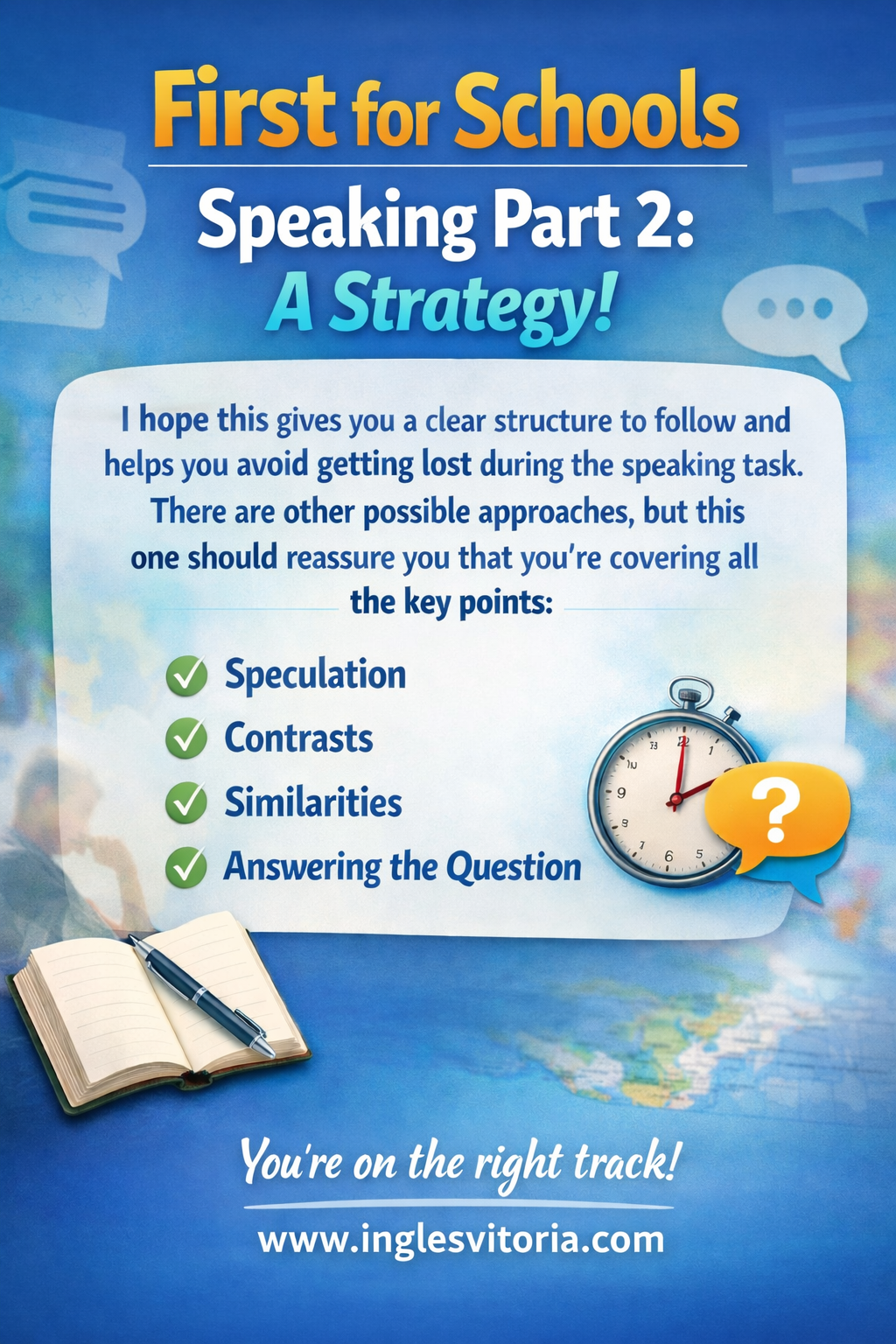
B2 First/ C1 Advanced – Speaking Part 2 Speculation

Today, we’re tackling a challenge many students face: mastering the use of speculative language for the B2 First and C1 Advanced Speaking Exam (specifically, Part 2, the ‘Long Turn‘).

You know the feeling! You’re given two pictures, and you need to compare them and speculate about what’s happening. Simple, right? Well, perhaps not. The key to achieving a truly impressive level isn’t just about fluency; it’s about nuance. It’s about showing the examiner that you can express uncertainty, possibility, and different shades of meaning. In other words, you need to show you can use speculative language. This is your secret weapon for talking about things you’re not entirely sure about, which is exactly what you need to do in this task. Continue reading “B2 First/ C1 Advanced – Speaking Part 2 Speculation”

The “Waking” Consonants

Have you ever noticed that English spelling feels like a game of hide-and-seek? Sometimes letters are silent, sometimes not. For high-level English students, mastering aspects like this is a game-changer. It will make you sound more advanced and confident. Today, we’re looking at why certain letters stay silent in short words but are pronounced in longer words from the same family. 
Continue reading “The “Waking” Consonants”

B2 First Speaking Part 1 – List of questions to practise

Preparing for the B2 First speaking exam can feel like a daunting task, but the key to success lies in consistent practice and self-preparation. By regularly engaging with a wide range of questions, you’ll build confidence, fluency, and a natural speaking style. It’s important to remember that while familiarity with common questions is helpful, memorising answers isn’t the goal. Instead, aim for spontaneous expression. Continue reading “B2 First Speaking Part 1 – List of questions to practise”

Other ways to say “How are you?” and how to respond

Free question mark sign question vectorGo Beyond “How are you?”

When learning English, many students fall back on the same exchange:

A: How are you?
B: Fine, thank you. And you?

That’s correct, but it can sound a bit repetitive — and native speakers often use other expressions in everyday conversation. Here are some great alternatives you can try.

Continue reading “Other ways to say “How are you?” and how to respond”

Self-study for speaking tests: 4 steps that will raise your game

Speaking exams are tough but with the right preparation and mindset, you can step into the examination hall with a good dose of self-confidence in your abilities and a feeling of being in control of the situation rather than overwhelmed by it.

Keep reading for some ideas to help you build confidence and take away some of the anxiety so that you can perform better on exam day.


Continue reading “Self-study for speaking tests: 4 steps that will raise your game”