What you will find here:
- a reminder of the “Assessment Criteria”
- an exam task
- an essay sample scoring Band 5
- specific details of why this would reach a Band 5 score
- links for further reading and self-learning
What you will find here:
 Preparing for the B2 First speaking exam can feel like a daunting task, but the key to success lies in consistent practice and self-preparation. By regularly engaging with a wide range of questions, you’ll build confidence, fluency, and a natural speaking style. It’s important to remember that while familiarity with common questions is helpful, memorising answers isn’t the goal. Instead, aim for spontaneous expression. Continue reading “B2 First Speaking Part 1 – List of questions to practise”
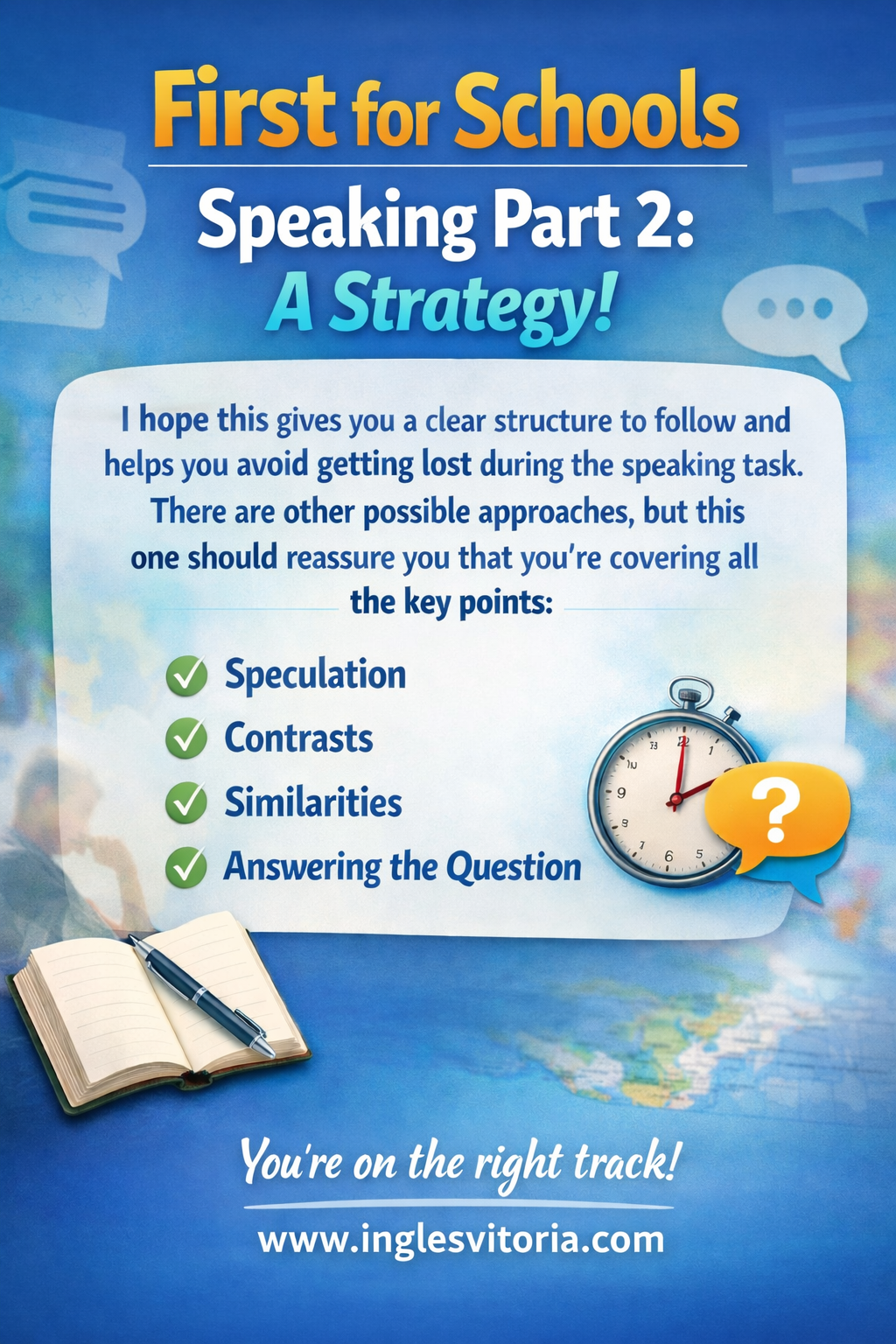
Here are some of the most common mistakes candidates make in B2 First Speaking Part 2, clearly explained, with tips on how to avoid them. Continue reading “B2 First Speaking Part 2: a strategy!”
 If you’re aiming to improve your formal writing or essay skills at B2 or C1 level, one grammar structure you need in your toolkit is “not only … but also.” This phrase is a powerful way to emphasise ideas, making your sentences more sophisticated and persuasive.
This structure is used to highlight two related points, showing that they are both true or important. It is commonly used in essays, reports, and academic writing. Continue reading “Structures that elevate your writing: “Not Only … But Also””
 Take every essay assignment as a golden opportunity to start training for exam day
I have hardly seen any students rejoice at the idea of writing an essay task for homework but here is the key to achieving that level of confidence you are aiming at. If you are consistent in dedicating time to writing periodically before exam day, you will get there with, admittedly, considerable effort, but also with the guarantee that the essay will not be a problem for you. Continue reading “Cambridge C1 Advanced (CAE) Essay (Mini-series Part 3) – Final tips”
This is the second part of a CAE Essay writing mini-series of blog posts. Click here for part 1.
Let’s begin by taking a step into the future. To make sure your essay is up to the task, you should be able to answer with a “yes” to the following questions once you have finished your writing:
Continue reading “Cambridge C1 Advanced (CAE) Essay (Mini-series Part 2) – Writing Stage”
There is no choice here. If you take the CAE -C1 Advanced, the essay is mandatory.
It is, therefore, crucial to be prepared and well-informed about what is expected of you. Daunting as it may seem at first, breaking it down into smaller tasks will help you get the hang of it. Let’s give some thought to what to do before you start writing. This simple action will guide you through and help you elaborate a successful piece of writing.
Continue reading “Cambridge C1 Advanced (CAE) Essay (Mini-series Part 1) – Getting started”
Speaking exams are tough but with the right preparation and mindset, you can step into the examination hall with a good dose of self-confidence in your abilities and a feeling of being in control of the situation rather than overwhelmed by it.
Keep reading for some ideas to help you build confidence and take away some of the anxiety so that you can perform better on exam day.
Continue reading “Self-study for speaking tests: 4 steps that will raise your game”

One of the joys of learning a language is that there’s always room for improvement, no matter your level. For instance, learning collocations can greatly enhance how you come across as an English speaker.”