Today, we’re tackling a challenge many students face: mastering the use of speculative language for the B2 First and C1 Advanced Speaking Exam (specifically, Part 2, the ‘Long Turn‘).
You know the feeling! You’re given two pictures, and you need to compare them and speculate about what’s happening. Simple, right? Well, perhaps not. The key to achieving a truly impressive level isn’t just about fluency; it’s about nuance. It’s about showing the examiner that you can express uncertainty, possibility, and different shades of meaning. In other words, you need to show you can use speculative language. This is your secret weapon for talking about things you’re not entirely sure about, which is exactly what you need to do in this task.
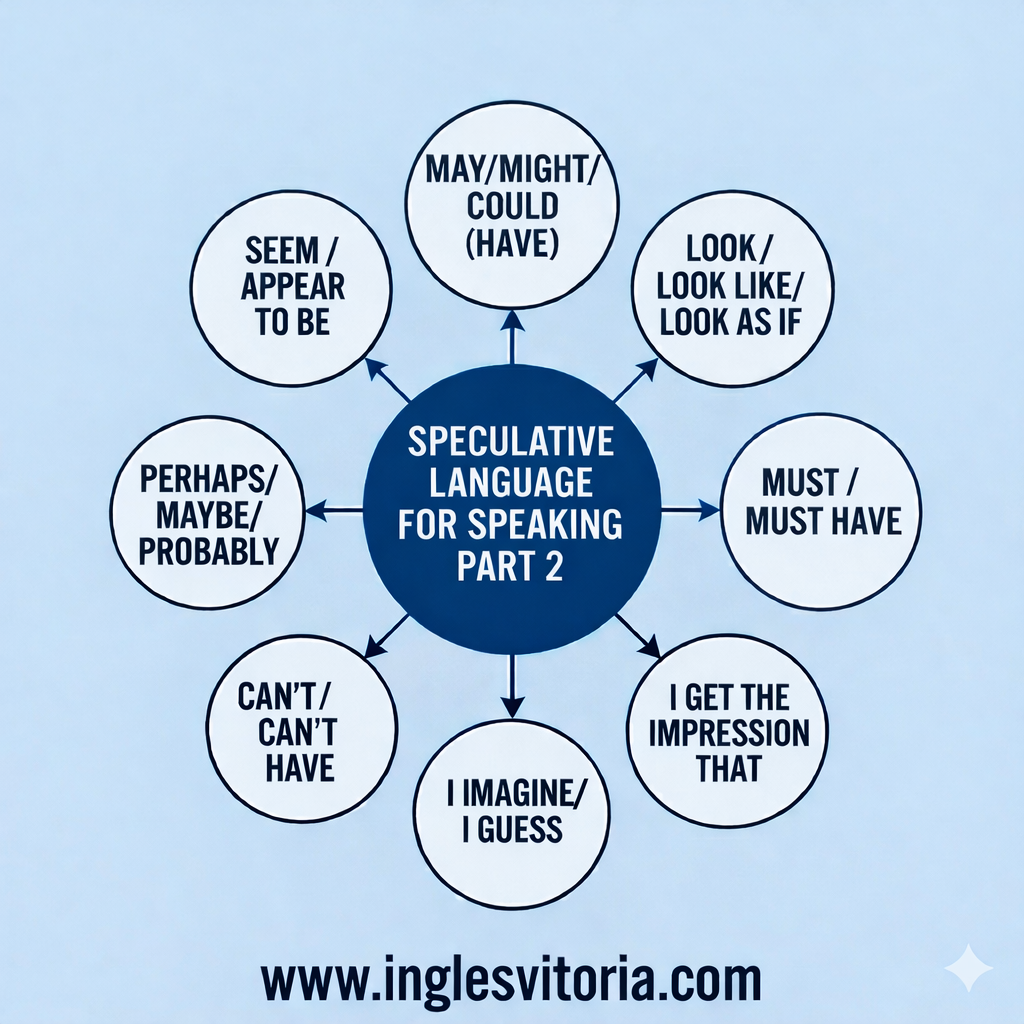
To make this easier for you to grasp and remember, I’ve created a handy spider diagram that you can find below. This diagram is your go-to guide for adding depth and variety to your speech. Let’s break down the different categories:
1. Verbs of Perception
-
Appear to be: It sounds more sophisticated than “look” or “seem.” Instead of saying “He is tired,” try “He appears to be quite drained.”
-
Seem: A versatile and common verb. “The people in this photo seem to be enjoying themselves.”
-
Look / Look like / Look as if: These are essential for talking about physical appearance or the impression someone or something gives. “It looks as if they’re having a great time.” “He looks like a dynamic teacher.” If you are not sure how to use these, click here.
2. Modal Verbs of Probability
-
Could / May / Might (have): These represent different degrees of possibility.
-
-
Present: “He could/may/might be waiting for someone.” (low degree of certainty)
-
Past: “They could have missed their train.”
-
-
-
Must / must have (Positive Deduction)
-
-
Present: “He must be very pleased.” (based on his smile)
-
Past: “It must have taken them hours to complete the task.”
-
-
-
Can’t / Can’t have (Negative Deduction)
-
-
Present: “He can’t be a doctor; he looks far too young.”
-
Past: “They can’t have left yet; their car is still in the driveway.”
-
-
3. Adverbs of Probability:
-
Perhaps / Maybe / Probably: Add these words to the beginning or end of your sentences to soften your statements and express probability.
-
“Perhaps the man in the second picture is feeling stressed.”
-
“They are probably on holiday.”
-
4. Expressions of Imagination and Deduction:
I imagine / I guess: These show that you are actively forming an opinion based on the visual evidence.
- “I imagine it must be quite cold there.”
- “I guess they’ve known each other for a long time.”
THIS DIAGRAM SUMS IT ALL UP!
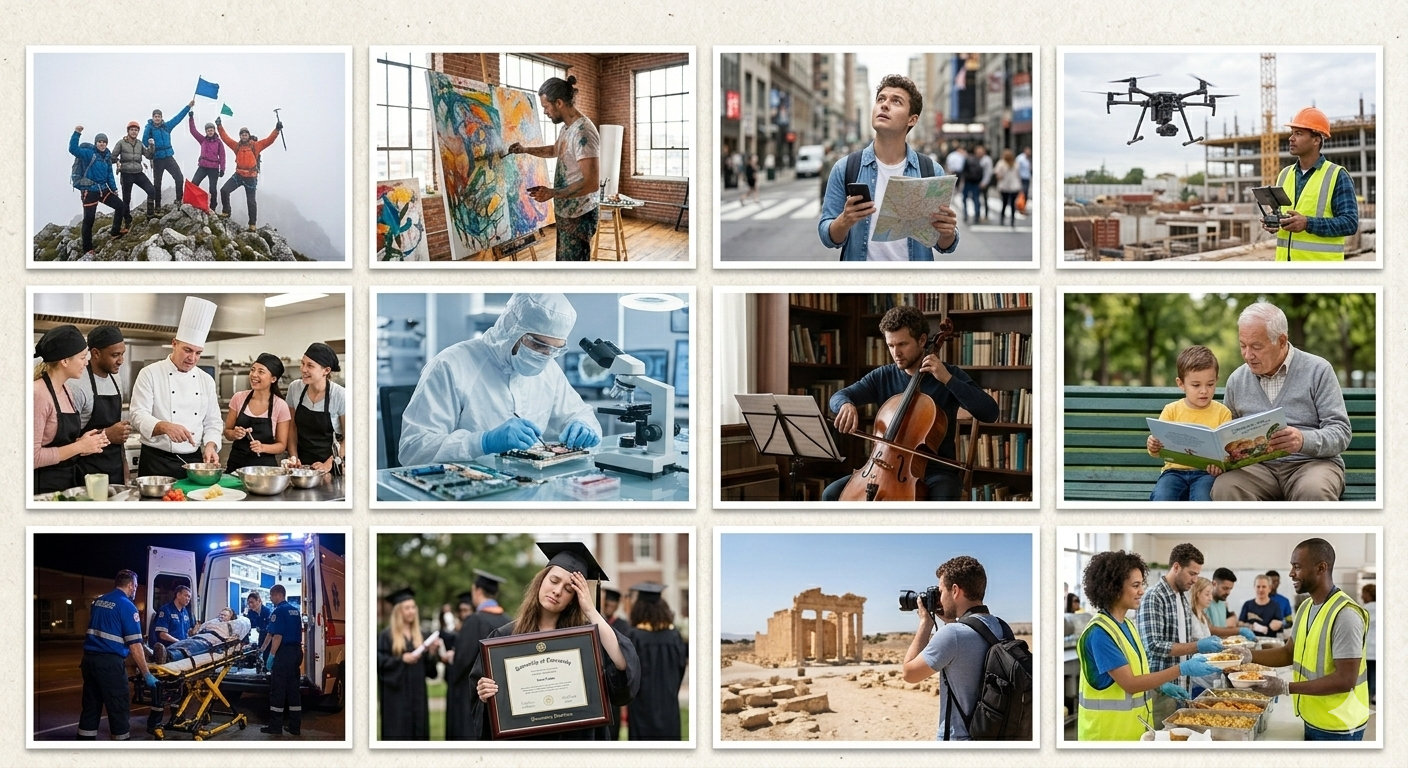
Practice by speculating about these random images.
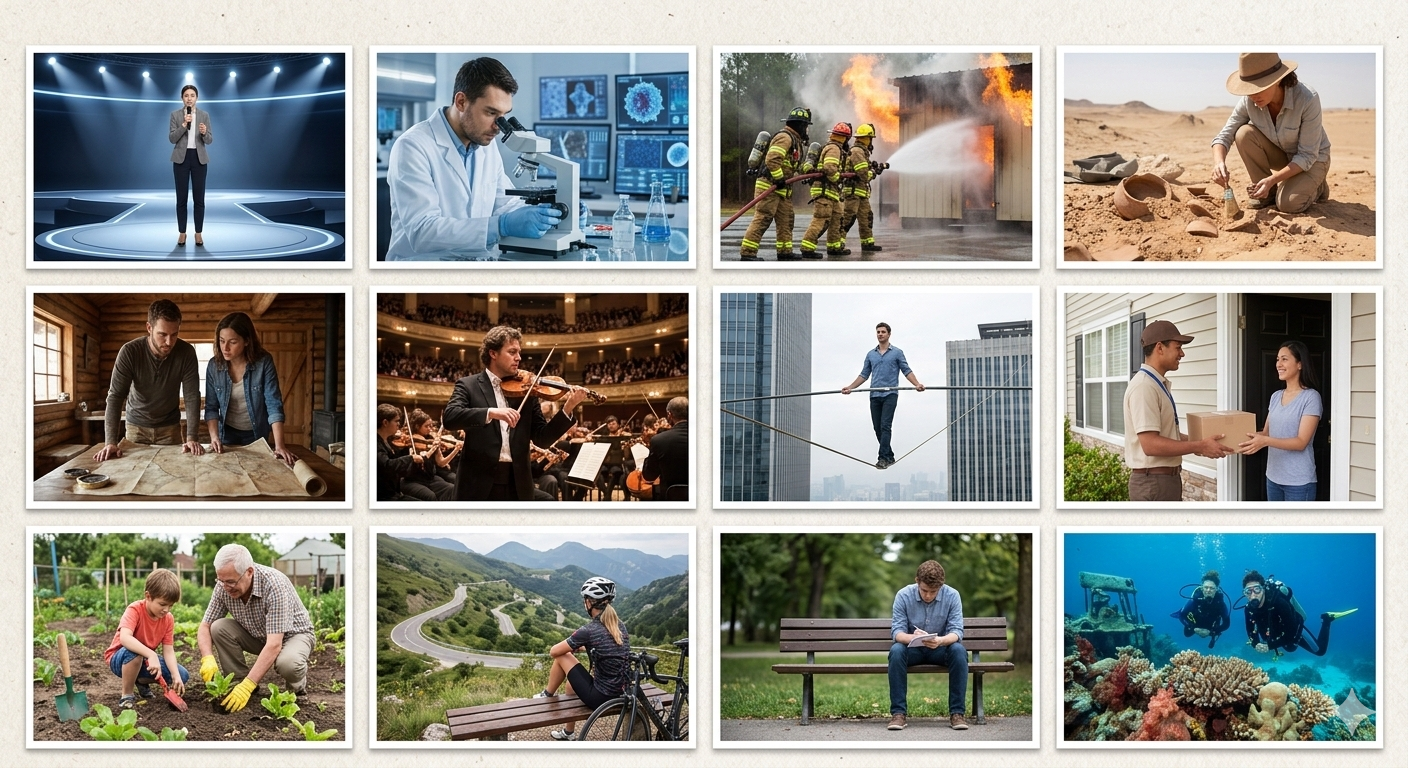
Mastering speculative language won’t happen overnight, but by using this diagram as a visual aid and practising incorporating these phrases into your speaking, you’ll feel much more confident and sound significantly more advanced in your next speaking practice session or exam.
Thanks for reading! 