Out and about and other BINOMIALS

A binomial is formed by two words and a conjunction that joins them as in: “After a quick visit to the hotel to drop off her bags, she’s been out and about exploring the city all day”. 

The order of the words is fixed and if you reverse it, it would sound unnatural and be wrong, e.g. “about and out”.

What follows is a selection of some binomials that  I consider useful.  I encourage you to learn them and try to use one next time you have a conversation in English.  Continue reading “Out and about and other BINOMIALS”

As mad as a hatter and other SIMILES

A simile is a  figure of speech that compares two things using as or like. It differs from a metaphor in that the metaphor says that something is something else as in “the world is a stage” whereas similes present similarities between two elements, e.g., as free as a bird. Let’s learn about the origin of some of them. Continue reading “As mad as a hatter and other SIMILES”

Show your feelings with the help of interjections

In informal English, you can use interjections to express your emotions.

An interjection is a bit like a sound, a short word * usually followed by an exclamation mark.

They are abrupt and spontaneous.

Here follows a list of some of the most common ones and the emotion they convey.

Continue reading “Show your feelings with the help of interjections”

When it comes to pronunciation, pick your battles

English pronunciation can present a significant challenge to non-native speakers; it can hinder fluent speaking and create insecurity issues. But the good news is that with time and perseverance your pronunciation can improve drastically. 

Based on my experience, both as an English learner myself and as a language teacher, in this blog post I intend to hint at some ideas to help you rise to the challenge and start a journey to a more confident approach to pronouncing, and thus, speaking. Continue reading “When it comes to pronunciation, pick your battles”

Context is best

Do you find it natural to memorise words or phrasal verbs in the form of a list? And most importantly, do you succeed at committing that knowledge to your long-term memory?

This traditional learning style may work for certain people or with certain areas of vocabulary, such as the irregular verb list but as a rule of thumb, I am inclined to say that CONTEXT IS BEST. Even in the case of the irregular verbs. Continue reading “Context is best”

6 phrasal verbs to speak about yourself

6 phrasal verbs to speak about yourself that will enhance your Speaking (Part 1) in the CAE exam.


The way you are seen by people, the impression you give.

You come across as a friendly/funny/serious/fussy … person, based on what you project to others.

“I would like to come across as a person who knows how to listen.” Continue reading “6 phrasal verbs to speak about yourself”

Words in the news

This post is based on an extra-curricular activity that I encouraged students to pursue for the length of a month.

By facebooking WORDS IN THE NEWS taken from every working day’s headlines, I intended to inspire them to do the same. Some did so and shared them with me. Others went the extra mile and declared their intention to keep going after the month is finished. 

Connected Speech

Looking into the flow of English

Image result for connected speech

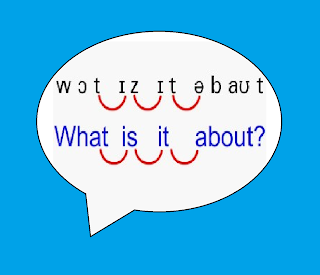
The natural rhythm that gives English its musicality is partly influenced by how the words are linked. In order to enhance our speaking and make it sound more natural and relaxed, we need to understand the mechanics of how this works.

This is not a typical feature in some languages such as Spanish so it will help to first analyse and recognise when this happens in natural speech to, later, implement it in your speaking. An additional benefit is that your overall improvement in listening comprehension and a more natural flow can lead to better results in tests.

Let’s look into some very basic everyday phrases in which connected speech makes its appearance.  Continue reading “Connected Speech”