Here are B2-level phrases and expressions to describe your daily routine. They will be useful to elevate your answers in Speaking part 1.
Continue reading “B2 Speaking part 1 – Talking about your daily routine”
Here are B2-level phrases and expressions to describe your daily routine. They will be useful to elevate your answers in Speaking part 1.
Continue reading “B2 Speaking part 1 – Talking about your daily routine”
Have you ever noticed that English spelling feels like a game of hide-and-seek? Sometimes letters are silent, sometimes not. For high-level English students, mastering aspects like this is a game-changer. It will make you sound more advanced and confident. Today, we’re looking at why certain letters stay silent in short words but are pronounced in longer words from the same family.
Preparing for the B2 First speaking exam can feel like a daunting task, but the key to success lies in consistent practice and self-preparation. By regularly engaging with a wide range of questions, you’ll build confidence, fluency, and a natural speaking style. It’s important to remember that while familiarity with common questions is helpful, memorising answers isn’t the goal. Instead, aim for spontaneous expression. Continue reading “B2 First Speaking Part 1 – List of questions to practise”

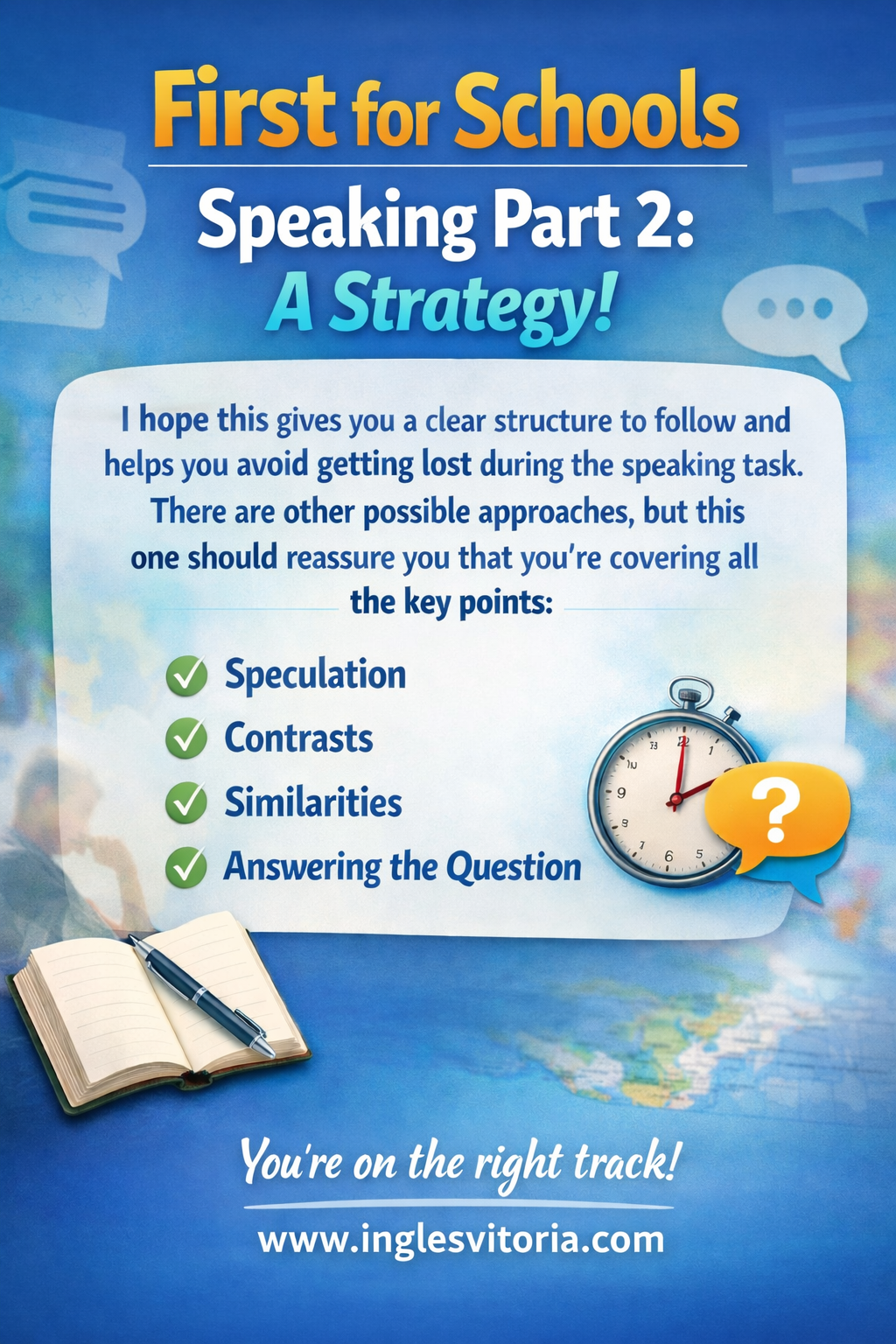
Here are some of the most common mistakes candidates make in B2 First Speaking Part 2, clearly explained, with tips on how to avoid them. Continue reading “First for schools Speaking Part 2: a strategy!”
If you’re aiming to improve your formal writing or essay skills at B2 or C1 level, one grammar structure you need in your toolkit is “not only … but also.” This phrase is a powerful way to emphasise ideas, making your sentences more sophisticated and persuasive.
This structure is used to highlight two related points, showing that they are both true or important. It is commonly used in essays, reports, and academic writing. Continue reading “Structures that elevate your writing: “Not Only … But Also””
Go Beyond “How are you?”When learning English, many students fall back on the same exchange:
A: How are you?
B: Fine, thank you. And you?
That’s correct, but it can sound a bit repetitive — and native speakers often use other expressions in everyday conversation. Here are some great alternatives you can try.
Continue reading “Other ways to say “How are you?” and how to respond”